You've probably seen the takes. "Social media is ruining relationships." "Couples who post together stay together." "If you don't post your partner, you're hiding something." Everyone has an opinion. Most of them are too simple.
The truth about social media relationship effects is more nuanced than any hot take allows. Social media isn't poison. Private sharing isn't a magic cure. But the way you share, and who you share with, shapes your relationship in ways most couples never stop to examine.
So let's actually look at this. Not to declare a winner, but to understand what each kind of sharing does to the way you connect.
What Social Media Does Well (and Where It Breaks Down)
Social media is genuinely good at some things. It helps you stay loosely connected with a wide circle. It lets you celebrate big milestones with people who care about you. It can make your partner feel publicly valued, which matters to some people.
The problems start when daily relationship sharing moves onto public platforms. That's when the social media relationship effects get tricky.
First, there's the audience problem. When you share something about your relationship publicly, you're not just talking to your partner. You're talking to your ex, your coworkers, your partner's aunt, and that guy from high school. This changes what you say and how you say it. You optimize for likability, not honesty.
Second, there's the comparison trap. You see other couples' curated highlights and unconsciously measure yours against them. Research on social media impact on relationships consistently points to this: the more you consume other couples' content, the less satisfied you tend to feel with your own relationship. Not because your relationship is worse, but because you're comparing your behind-the-scenes with their highlight reel.
Third, there's the validation loop. Posting about your relationship and getting positive feedback feels good. But it creates a subtle dependency. The relationship starts needing external validation to feel confirmed. A beautiful evening together feels slightly incomplete if it wasn't documented and approved by others.
What Private Sharing Actually Feels Like
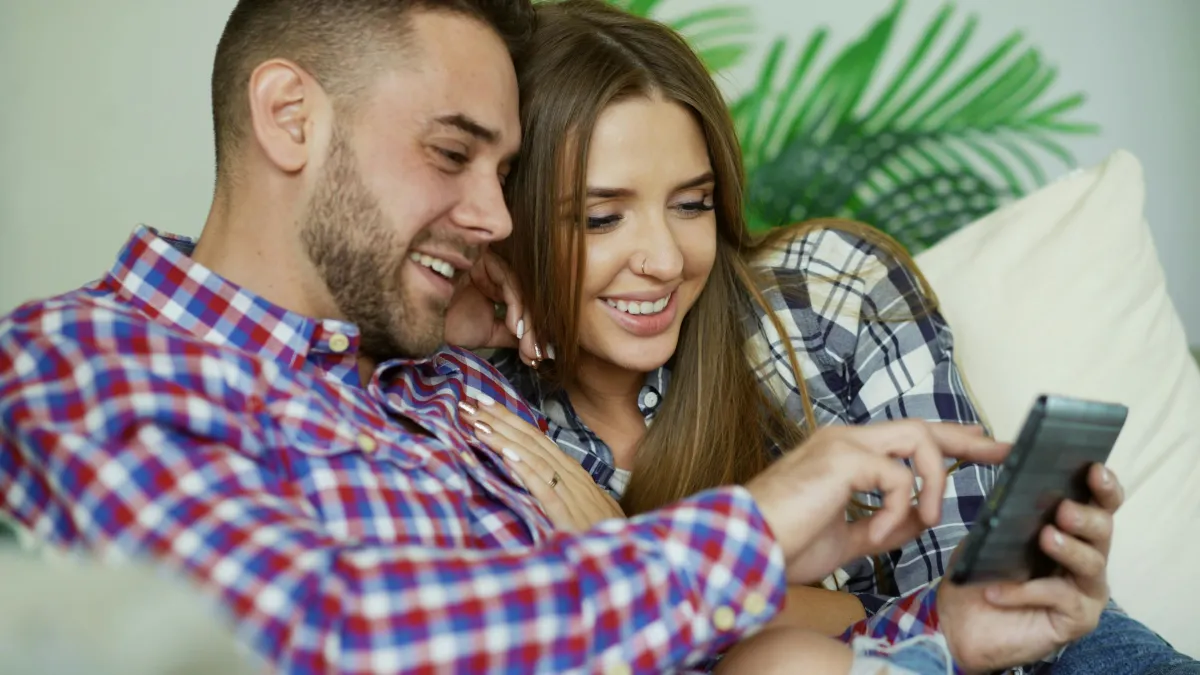
Private sharing is different in ways that are hard to explain until you've tried it. The closest analogy is the difference between performing a song on stage and singing it to someone in your living room. Same song. Completely different experience.
When you share a thought with just your partner, in a space where no one else will ever see it, something shifts. You stop editing. You stop wondering how it sounds. You just say what's true. "I was thinking about you during my meeting today and it made me smile." "I'm stressed and I don't know why." "Remember that thing you said last week? I'm still thinking about it."
These aren't the kinds of things you'd post publicly. They're too small, too personal, too unpolished. But they're the actual building blocks of intimacy. They're the moments that make someone feel known.
Private sharing couples often report something counterintuitive: sharing less publicly leads to sharing more with each other. When the only audience is your partner, the bar for "worth sharing" drops to exactly where it should be. Everything becomes worth sharing because the point isn't impressiveness. It's connection.
The Science Is More Interesting Than the Headlines
Most headlines about social media and relationships cherry-pick one finding and run with it. The actual research is more complicated and more interesting.
What studies consistently show is that it's not whether you use social media that matters, but how. Passive scrolling (consuming other people's content without engaging) tends to increase dissatisfaction. Active, intentional use (sharing meaningfully with specific people) tends to be neutral or positive.
The social media relationship effects that cause the most damage are often invisible. It's not the big fight about a suspicious like or a flirty comment. It's the slow erosion of attention. The partner who's physically present but mentally scrolling. The conversation that gets interrupted by a notification. The evening that becomes a parallel phone session.
Private sharing sidesteps all of this. There's no feed to scroll. No notifications competing for attention. No algorithm deciding what your partner sees. You write something, they read it when they're ready. That's it.
This is part of why shared journaling has been gaining attention as a relationship practice. It combines the benefits of reflection with the intimacy of sharing, without any of the social media overhead.
The Real Question Isn't "Which Is Better?"
Framing this as social media vs. private sharing creates a false choice. You don't have to pick one. The more useful question is: what kind of sharing is your relationship actually getting?
If most of your relationship sharing happens on public platforms, your partner is getting the same version of you that everyone else gets. That's not inherently bad, but it's worth asking: do they also get the unfiltered version? The version that's messy, uncertain, and real?
If the honest answer is "not really," it might not be a social media problem. It might be a channel problem. You might need a space that's just for the two of you, where the whole point is honesty, not presentation.
Some couples who stopped posting publicly found that the gap was quickly filled by deeper private sharing. Others kept posting but added a private sharing practice alongside it. Both work. The key isn't eliminating one thing. It's making sure the most important relationship in your life is getting your most honest sharing.
A Simple Experiment Worth Trying
Here's something you can try this week. For seven days, every time you want to post something about your relationship or your day, send it privately to your partner instead. Don't delete social media. Don't make a big declaration. Just redirect the impulse.
Notice what happens. Notice if you write differently when only one person will read it. Notice if your partner responds differently when they know a thought was meant only for them. Notice how it feels to have moments that belong to the two of you, with no public record and no outside commentary.
Most people who try this are surprised by how much it changes. Not because social media is evil, but because private sharing activates something different: vulnerability, honesty, and the quiet confidence that comes from knowing your partner sees the real you.
If you want to explore private alternatives to social media for couples, there are more options than you might think. The important thing is making a deliberate choice about where your best thoughts go.
What Your Relationship Deserves
Your relationship doesn't need a bigger audience. It needs more honest moments between the two of you. Social media can coexist with that, but it can't replace it.
The social media relationship effects that matter most aren't the dramatic ones. They're the quiet ones: the slowly shrinking space for vulnerability, the growing habit of performing closeness instead of feeling it, the thoughts that never get shared because they're not "post-worthy."
Private sharing gives those thoughts a home. And when they finally have one, relationships tend to grow in ways that no amount of public posting ever produced.
We made Sharing Me for this. No likes, no feed, just the people who matter.