
It's 11pm and you're exhausted. Your partner just woke up and wants to talk. Or it's the other way around: you're buzzing with energy in the morning and they're half-asleep, trying to keep their eyes open for a call that neither of you is really present for.
Long distance relationship time zones add a layer of difficulty that same-zone couples never have to think about. Your schedules don't overlap neatly. The windows where you're both awake and available shrink. And the guilt of missing that window, or sleeping through a message, can start to erode something that should feel easy.
But here's the thing: time zones don't have to be the enemy. They can actually work in your favor, if you stop trying to fight them.
The Problem With Forcing Synchronous Communication
When you're in different time zones, the natural instinct is to find the overlap. That two-hour window where you're both awake and somewhat functional, and you cram all your connection into it. A call here, a flurry of texts there, and then silence until tomorrow's window opens.
This approach is exhausting. It turns connection into a scheduling exercise. And it makes both of you resentful of your own routines, because sleep, work, and social life all compete with that narrow window.
The real issue isn't the time difference. It's the assumption that meaningful communication has to happen live. That you both need to be present, at the same time, for it to "count." If you can let go of that assumption, everything changes.
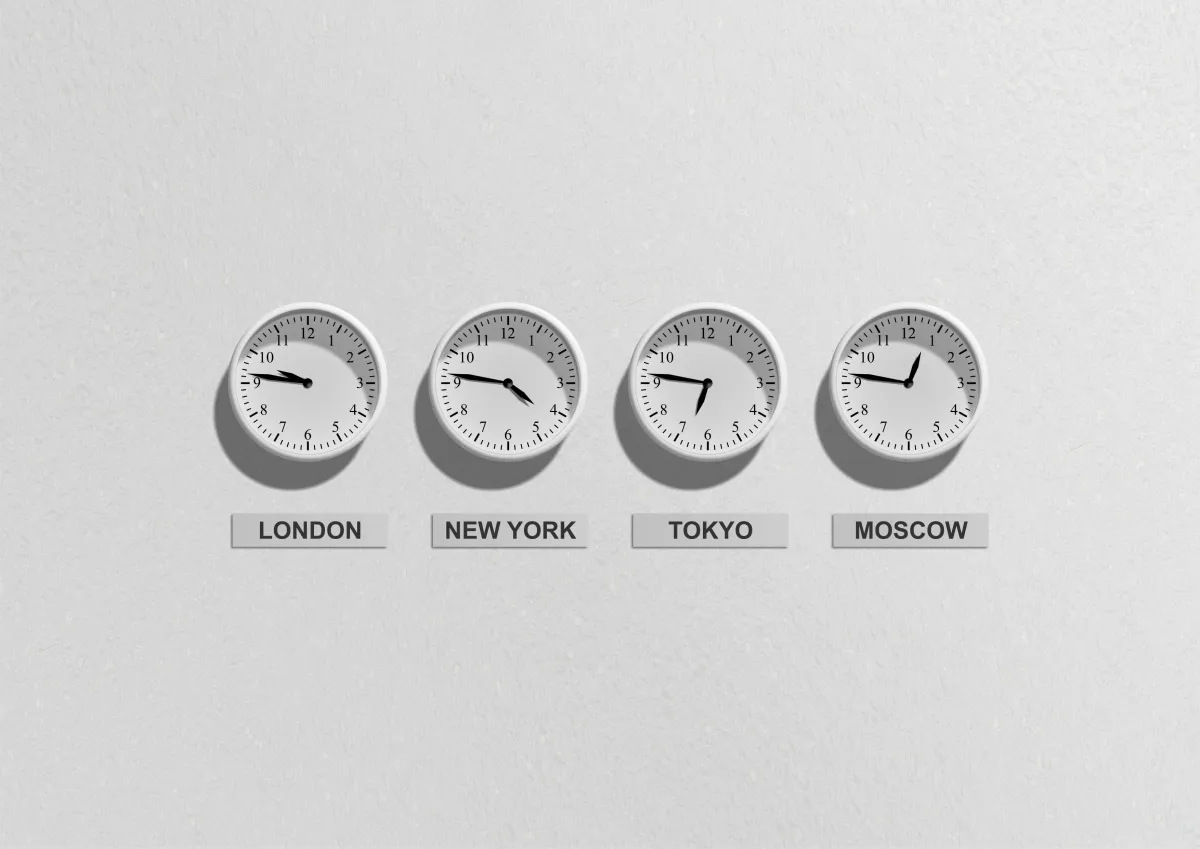
Async Communication as a Feature, Not a Bug
Think about what happens when your partner writes you a thought before they go to sleep. You're still in the middle of your afternoon. You open it later, maybe during your evening walk or right before bed. You read it slowly. You sit with it. And then you write your own thought back.
They wake up to your words. You wake up to theirs. It's like leaving notes on each other's pillow, except the pillow is a phone and the distance is six thousand kilometers.
This is what async communication in a relationship looks like, and it's genuinely beautiful when you lean into it instead of fighting it. You're not missing each other's moments. You're creating a rhythm where every morning starts with something from the person you love.
LDR couples in different time zones who embrace async sharing often report feeling more connected than when they were trying to force live calls. Because the sharing is intentional, unhurried, and honest. There's no pressure to respond instantly. There's no awkward silence on a call when you're both too tired to think of something to say.
The Beauty of Waking Up to a Thought From Yesterday
There's something specific about the time zone experience that no other LDR setup has: the morning message. Not a "good morning" text (those are fine but forgettable). A real thought. Something your partner wrote last night when their day was ending, waiting for you when your day begins.
"I had the strangest conversation with my colleague today, and I keep turning it over in my head."
"I walked past that restaurant we talked about trying. I'm adding it to the list."
"Today was hard and I don't really know why. But I wanted to tell you."
You read this with your coffee. It colors your morning. You carry it with you. And tonight, when their morning starts, you'll leave them something too.
This back-and-forth across time zones creates a kind of ongoing conversation that never really stops. It just moves slowly, like a letter exchange that takes hours instead of days. That pace is good. It gives you time to think about what you want to say, instead of blurting out whatever comes to mind on a live call.
Practical Ways to Make Time Zones Work
Stop chasing the overlap. You don't need to find the perfect window. You need to find a daily habit that doesn't depend on both of you being available simultaneously. If one shared thought per day is enough to change a relationship (and it is), then time zones are irrelevant. You write when you write. They read when they read.
Save live calls for when they feel right. Don't schedule them daily. Let them happen when you both have energy and time, even if that's only twice a week. A twenty-minute call where you're both fully present is worth more than seven half-awake nightly check-ins. Read more about finding the right daily rhythm and what works for different schedules.
Use the time difference to your advantage. Your partner's morning recap of your evening message can include their reaction, their own day ahead, their plans. It creates a natural structure for your communication: you close your day by sharing, they open theirs by reading. It's a loop that sustains itself.

When the Time Difference Feels Like Too Much
There are hard days. Days when you just want to talk right now, and they're asleep. Days when something happens and you can't share it with the one person you want to tell. Days when the math of "if it's 3pm here, then it's..." makes you want to throw your phone at the wall.
Those days are real. And on those days, it's okay to just send the message anyway, even though they won't read it for hours. Write it as if they're listening. "I know you're asleep, but I just need to say this." They'll read it. They'll feel the urgency of it. And they'll respond with the kind of care that only comes from knowing someone chose to tell you something even when they couldn't get an immediate answer.
Time zone couples learn something that same-zone couples often don't: not every feeling needs an instant response. Sometimes the most powerful thing is knowing your words are waiting for someone, and they'll get to them when the sun reaches their side of the world.
Distance Is Measured in Hours, Not Miles
For time zone couples, the distance isn't really about geography. It's about the hours between your lives. And those hours can feel like a wall, or they can feel like a bridge. It depends entirely on whether you use them.
Leave your partner something to wake up to. Let them leave you something to come home to. The daily activities that keep LDR couples close don't need to be synchronized. They just need to be consistent. Async communication in a relationship isn't a compromise. It's a different kind of intimacy, one that works even without video calls, even across twelve time zones.
If you want a quieter place to put these thoughts, that's what Sharing Me is for.