
There's a specific kind of heartbreak that comes with watching your grandchild grow up through photos on a screen. You see the first steps, but you weren't there to catch them. You hear about the new word, but you didn't hear it yourself. Grandparents far away from their grandchildren carry a quiet grief that doesn't always get talked about.
But distance doesn't have to mean disconnection. When grandparents stay connected with grandchildren intentionally, even from hundreds or thousands of miles away, those relationships can become some of the deepest a child ever has.
This isn't about replacing in-person time. Nothing does that. It's about finding ways to be present in a grandchild's life that go beyond the occasional holiday visit.
Long Distance Grandparenting Starts With Showing Up Consistently
The biggest mistake grandparents make is waiting for the big moments. Birthdays, holidays, summer visits. Those matter, of course. But a grandchild's sense of closeness isn't built on three visits a year. It's built on regularity.
A five-minute video call every Sunday. A voice message every morning. A postcard every week. The format matters less than the consistency. When a child knows that every Tuesday, Grandma calls, that becomes part of their world. You're not a guest in their life. You're woven into it.
This is harder than it sounds, especially when schedules don't line up or when the kids are at an age where sitting still for a phone call feels impossible. But showing up consistently, even briefly, is the foundation everything else is built on. As we explored in Why One Thought a Day Is Enough to Change a Relationship, small daily gestures create more closeness than occasional grand ones.
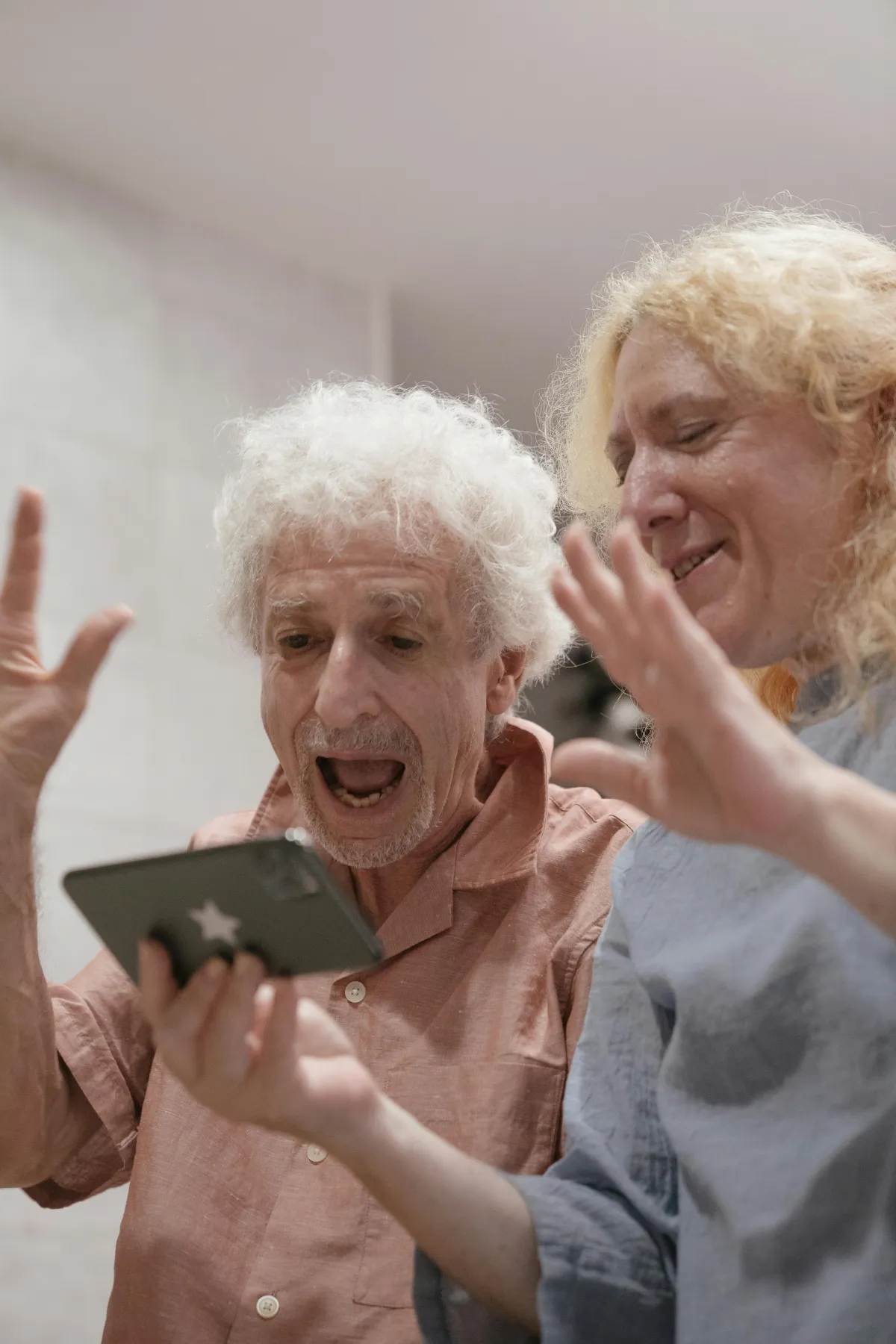
You Don't Have to Be Tech-Savvy to Stay Close
There's a common assumption that long distance grandparenting requires mastering technology. That you need to be comfortable with video calls, messaging apps, and shared photo albums to stay in your grandchild's life.
Technology helps. But some of the most meaningful grandparent grandchild connections happen through decidedly low-tech channels.
Handwritten letters are powerful, even for young children who can't read yet. A child who receives an envelope addressed to them, with a drawing or a sticker inside, learns that someone far away is thinking about them. As they grow, those letters become keepsakes. Your grandchild might not remember what you said on a FaceTime call last March, but they'll keep your letters in a shoebox for decades.
Recorded stories work beautifully too. Record yourself reading a favourite bedtime book and send the audio to the parents. The child hears your voice every night, connected to something comforting and safe. You become the voice of bedtime, even from 3,000 miles away.
Care packages don't need to be expensive. A small toy from a local shop, a recipe card for cookies you used to make together, a pressed flower from your garden. The point isn't the gift. It's the reminder: I'm here, I'm thinking of you, you matter to me.
Making Video Calls Work With Kids (Realistically)
Let's be honest. Video calling a toddler is an exercise in patience. They stare at the screen for thirty seconds, wave, and then run off to play with something more interesting. A seven-year-old might sit still a bit longer, but "tell Grandpa about school" usually produces a shrug and a "fine."
The trick is to stop treating calls like conversations and start treating them like activities. Read a book together (hold it up to the camera). Play a guessing game. Show each other something you found today. Build with blocks at the same time. Cook something simple together with the parent helping on the child's end.
For older kids and teenagers, the dynamic shifts. They don't want to be put on a call. They want to be asked, directly, about things that matter to them. If your granddaughter is into drawing, ask to see her latest sketch. If your grandson just started a new game, ask him to explain it to you. Genuine curiosity about their world beats generic check-in questions every time.
Keep calls short. Ten to fifteen minutes is plenty for young children. Better to have a short, fun call that ends with everyone smiling than a long, forced one that feels like homework.
Creating Shared Rituals Across the Distance
Rituals give relationships structure, and grandparent grandchild connections benefit enormously from having "a thing."
Maybe every Sunday you and your grandchild watch the same movie and talk about it afterward. Maybe you both grow the same plant and send each other progress photos. Maybe you write each other one question a week and answer it the following week. Maybe you share a daily thought, one small moment from your day, so your grandchild starts to see your life as something real and ongoing, not just something that exists when they visit.
The ritual doesn't need to be complicated or time-consuming. It needs to be yours. Something that belongs to your relationship specifically, not something the parents organize or mediate.
As children grow, these rituals evolve. The Sunday movie becomes a TV series you watch "together" on your own couches. The weekly question becomes a text thread about whatever's on your mind. The shared plant becomes a shared hobby. The shape changes, but the habit of connection remains.

The Parents Are the Bridge (and That's Okay)
One thing that makes the grandparent grandchild connection unique is that, especially when children are young, it depends almost entirely on the parents. They're the ones who set up the calls, hand over the phone, read the letters aloud, and send the photos.
This can feel frustrating. You're reliant on someone else's schedule, energy, and willingness. But instead of seeing this as a limitation, treat it as a partnership. Make it easy for the parents to include you. Don't expect them to coordinate elaborate calls. Send things that require zero effort on their end (a voice message the child can listen to, a letter that arrives in the mailbox).
Be understanding when a call gets skipped because someone had a meltdown or bedtime ran late. The parents aren't gatekeeping. They're managing a chaotic life, and your grace makes it more likely they'll keep making space for you.
As we discussed in How to Keep Your Family Close When You Live in Different Countries, the families that stay closest across distance are the ones who make connection easy, not elaborate.
Grandparents Far Away Still Shape Who Their Grandchildren Become
There's a fear that comes with distance: that your grandchild won't really know you. That you'll be the nice person who shows up at Christmas with gifts but isn't part of their real life.
That fear is valid, but it isn't inevitable. Children form deep bonds with people who show up consistently and care genuinely, regardless of physical proximity. Your stories, your values, your curiosity about their world, these things travel across any distance.
The grandparent who sends a weekly voice message becomes the grandparent whose voice the child recognizes immediately. The grandparent who asks about the school play becomes the grandparent the child calls first with good news. Presence isn't about geography. It's about attention.
Your parents won't be around forever, and one day, you won't be either. But the way grandparents stay connected with grandchildren today becomes the story those children tell their own kids someday.
Start With One Small Thing
You don't need a plan for all of it. You need one small thing you'll do this week. One call, one letter, one voice message, one shared moment.
If you're looking for the simplest possible way to share a daily thought with your family, no matter the distance, Sharing Me was built for exactly that.